Here is the uncomfortable answer to "what is the best sippy cup for daycare": for most children, it is a straw cup — and the classic hard-spout sippy that dominates store shelves is the option paediatric dentists and feeding specialists are least enthusiastic about.
This guide covers what the guidance actually says, which cup types daycare will accept, why cups leak, and how to clean the part where mould hides.
What the guidance actually says
The timeline
Paediatric advice is fairly consistent: introduce a cup at around six months, and be fully off the bottle somewhere between 12 and 18 months. Daycare usually enforces this before parents do — many toddler rooms simply do not take bottles.
Why the hard spout is not the default choice
A rigid spout works the same way a bottle does: the child sucks, the tongue stays in an immature pattern, and prolonged use puts pressure on developing teeth and palate. A straw cup asks for lip closure and tongue retraction instead — closer to how an older child drinks.
The dental risk that has a name
Carrying a cup of milk or juice around all day exposes teeth to sugars almost continuously, which is the mechanism behind early childhood tooth decay. The National Institute of Dental and Craniofacial Research and MedlinePlus both make the same point: it is the constant sipping, not the cup itself, that does the damage. Water between meals solves most of it.
Why this matters more at daycare than at home
At home a cup gets used a few times a day. At daycare it is in use for the whole day — and the day is long. Across the 10,848 providers in our directory with recorded hours, 91.5% are open eight hours or more and 56.5% are open eleven hours or more.
That is eight to eleven hours of drinking from one cup, refilled by staff, washed at the center or sent home to be washed. The cup you choose has to survive that cycle daily, not occasionally.
Cup types, ranked for daycare
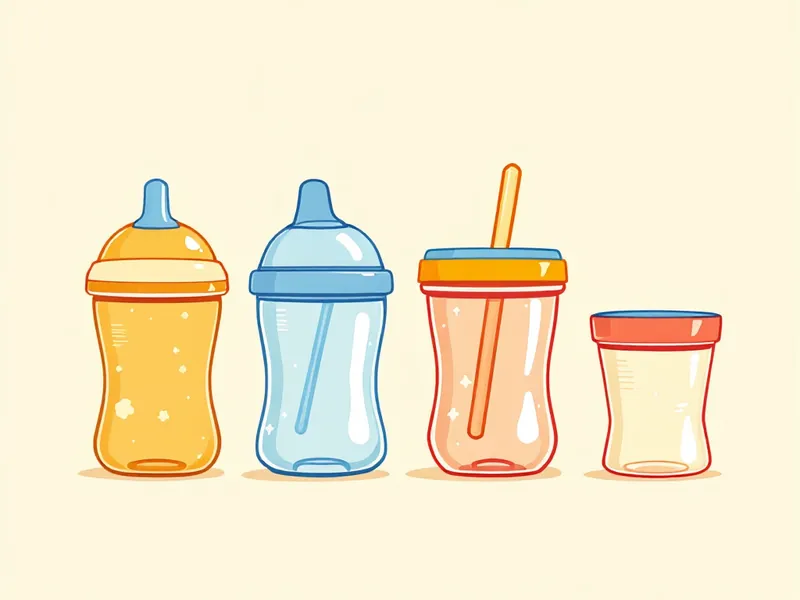
Straw cup — the usual best answer

Encourages a mature drinking pattern, easy for staff to refill, and widely accepted. The downside is cleaning — straws need a brush, and a neglected straw is the grimmest thing in the bag.
360 rim cups
Drink from any point on the rim, closest to real cup drinking with a seal that stops spills. Good transitional option; the silicone rim needs regular checking because it holds residue.
Soft-spout cups
Gentler than a hard spout and useful as a very short bridge from bottle, but they keep the sucking pattern going. Fine for a few weeks, not for a year.
Hard-spout sippy cups
Durable, cheap, leak-resistant — and the one specialists suggest moving on from quickly. If your center requires one, use it for water and keep milk to mealtimes in another cup.
Open cups

Many centers practise with small open cups at the table from around twelve months, because that is the actual end goal. You will not send an open cup in the bag, but do not be surprised when the room uses one.
What daycare will actually accept
Ask before buying
Some rooms ban straws for younger toddlers, some require a specific type, and some supply cups entirely. One question at drop-off saves a wasted purchase.
Leak-proof is non-negotiable
The cup lives in a bag with clothes. A cup that leaks when it tips is a cup that ruins the spare outfit and the comfort item at the same time.
The child must open and drink from it alone
Staff are managing a room, not one child. A lid that needs an adult’s grip gets left closed, and a child who cannot drink independently drinks less.
It has to be labeled, permanently
With a median center licensed for 58 children, unmarked cups do not come back. Bottle and cup labels take heat and washing, so buy labels rated for it — see our guide to daycare labels that survive the dishwasher.
Sizing
Around 7 to 10 ounces is right for a toddler. Bigger cups are heavier in the bag and encourage all-day sipping, which is the habit to avoid.
Why cups get mixed up — and why that matters
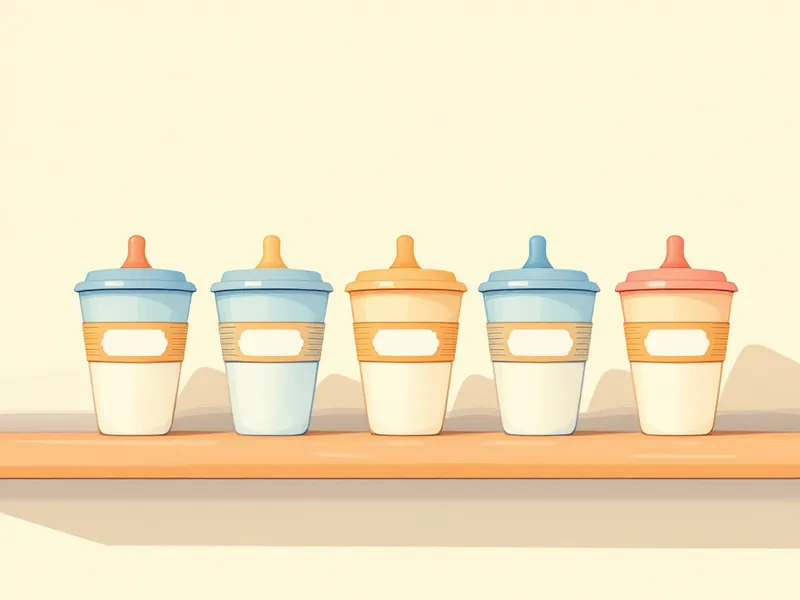
Popular cups repeat across a room, and a cup that loses its label becomes communal by accident. That is a hygiene problem, not just an inconvenience: child care health guidance from child care health consultants at the University of North Carolina treats drinking vessels as personal items that should not be shared between children, precisely because they transmit illness between mouths.
Buy a cup that takes a band, not just a sticker
Silicone bands survive sterilising better than adhesive on the curved part of a cup, and they stay put when a sticker edge lifts.
Label the lid separately
Lids come off at washing-up and travel independently. A cup labeled only on the body loses its lid to the communal pile within a fortnight.
Why cups leak (and how to stop it)
The valve is in backwards
The most common cause by far. Valves are directional and easy to reinsert wrongly after washing.
The gasket is missing or perished
Silicone rings stretch and tear. Most brands sell replacements, and a fresh gasket usually fixes a cup that "suddenly" started leaking.
Overtightening
Cranking the lid down deforms the seal. Firm is enough.
Temperature
Filling with warm liquid then sealing creates pressure that pushes liquid out as it cools. Fill with cool water for the bag.
Cleaning: the part everyone gets wrong
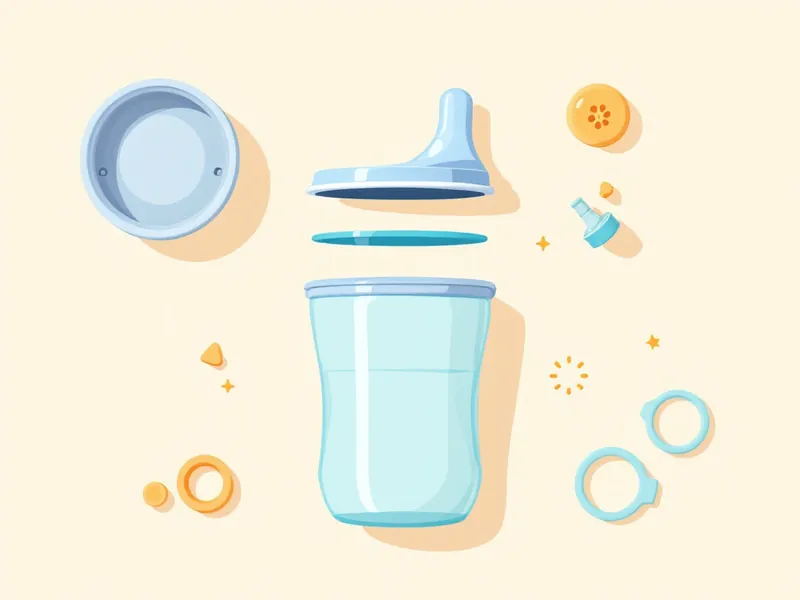
Take it fully apart, every time
Lid, valve, gasket, straw. Mould grows in the valve and under the gasket, and a cup washed assembled is not washed.
Use the right brush
A straw brush costs almost nothing and is the only thing that cleans the inside of a straw. Dishwasher cycles do not reach it.
Dry fully before reassembly
A sealed damp cup grows mould overnight. Dry the parts separately, assemble in the morning.
Replace parts, not whole cups
Valves and straws are consumables. Keep spares; it is cheaper than buying new cups and means a cup never leaves the rotation.
Check the dishwasher rules
Top rack only for most cups, and heated drying can warp lids so they stop sealing — the classic cause of a cup that leaks after a few months.
How to pack it so it survives the journey
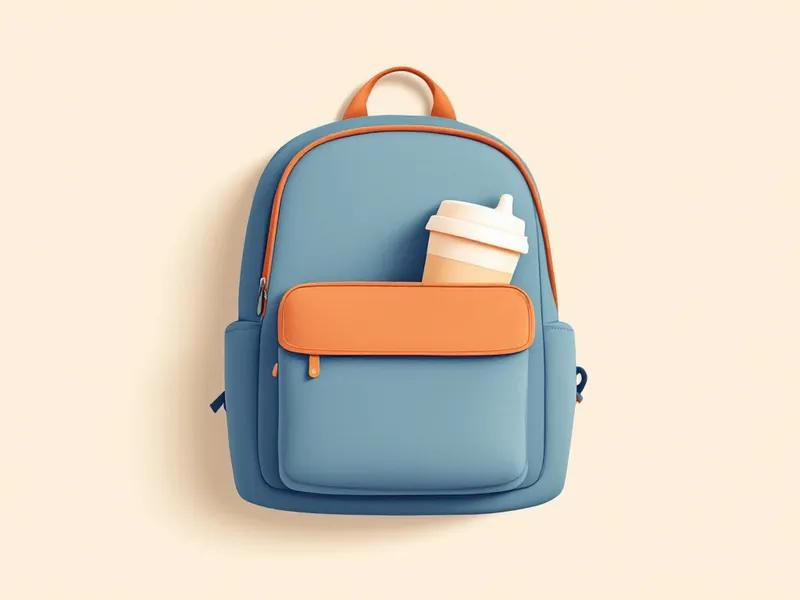
Upright, in an outside pocket, never loose in the main compartment with clothes. If the bag has no bottle pocket, a small waterproof pouch keeps a leak contained to itself.
Making the transition without a fight
Start at one feed
Swap the least-attached feed first — usually the daytime one — and keep the rest on the bottle for a week.
Let daycare do the heavy lifting
Children copy peers. Many families find the toddler room achieves in a fortnight what home could not in months, because everyone at the table has a cup.
Water in the cup, milk at meals
This one habit protects teeth and makes the cup less emotionally loaded than the bottle it replaced.
Do not offer both
If the bottle is still available, the cup loses. Once the switch starts, put the bottles away.
What we would buy, in order
- A straw cup, leak-proof, around 7–10 ounces, with replaceable straws.
- A spare set of valves and straws for that exact model.
- A straw brush — the cheapest item here and the one that decides whether the cup stays usable.
- A second identical cup, so one is always clean and both take the same spare parts.
Buying two of the same model rather than two different ones is the small decision that saves the most hassle: one set of spares, one cleaning routine, and no arguments about which cup is the good one. For everything else the center will ask for, see the supply checklist by age and our guide to daycare bags that fit the cubby.
Frequently asked questions
When should a baby switch from bottle to cup?
Introduce a cup around six months and aim to be off bottles between twelve and eighteen months. Daycare often sets the deadline for you, because many toddler rooms do not accept bottles at all.
Are sippy cups bad for teeth?
The cup is not the problem; constant sipping of milk or juice is. Prolonged hard-spout use also encourages an immature sucking pattern. Keep milk and juice to mealtimes, water the rest of the day, and move to a straw or open cup when you can.
Is a straw cup better than a sippy cup?
Generally yes. A straw promotes lip closure and tongue retraction, closer to mature drinking, whereas a hard spout continues the bottle pattern. Straw cups need more cleaning, which is the trade-off.
What size cup does a toddler need for daycare?
About 7 to 10 ounces. Larger cups are heavy in a bag and encourage all-day sipping; staff can refill smaller cups easily.
Why does my toddler cup leak?
Usually the valve is inserted backwards, the silicone gasket is worn or missing, or the lid was overtightened. Warm liquid sealed in a cup also pushes out as it cools. Check the valve first.
How do you clean a straw cup properly?
Take every part off, use a straw brush inside the straw, wash the valve and gasket separately, and dry all parts fully before reassembling. Cups washed assembled grow mould in the valve.
Can my child use an open cup at daycare?
Many rooms practise with open cups at the table from around a year, though you will still send a lidded cup in the bag. Ask what your center uses so you can practise the same way at home.
How many cups should I send to daycare?
One in the bag and one clean at home is enough if you buy two of the same model. Identical cups share spare parts and stop the "wrong cup" argument.
This guide contains affiliate links. If you buy through them we may earn a commission, at no extra cost to you. It never affects which providers we list or how they are ranked.