Two words get used as if they mean the same thing: licensed and accredited. They do not. One is a legal minimum every center must meet. The other is voluntary, expensive, and held by a small minority of programs.
Knowing which is which changes what you check before you enrol, and it changes whether a higher tuition is actually buying you anything.

The short answer
NAEYC accreditation is a voluntary quality standard awarded by the National Association for the Education of Young Children. A program applies for it, pays for it, is assessed against ten standards, and holds it for a fixed term.
Licensing is the law. Every child care provider operating legally holds a license, permit or registration from its state. It sets the floor: ratios, safety, background checks, basic health rules.
So the honest framing is: licensing tells you a program is allowed to operate. Accreditation tells you a program chose to be measured against something higher.
Licensed vs accredited: the difference that actually matters
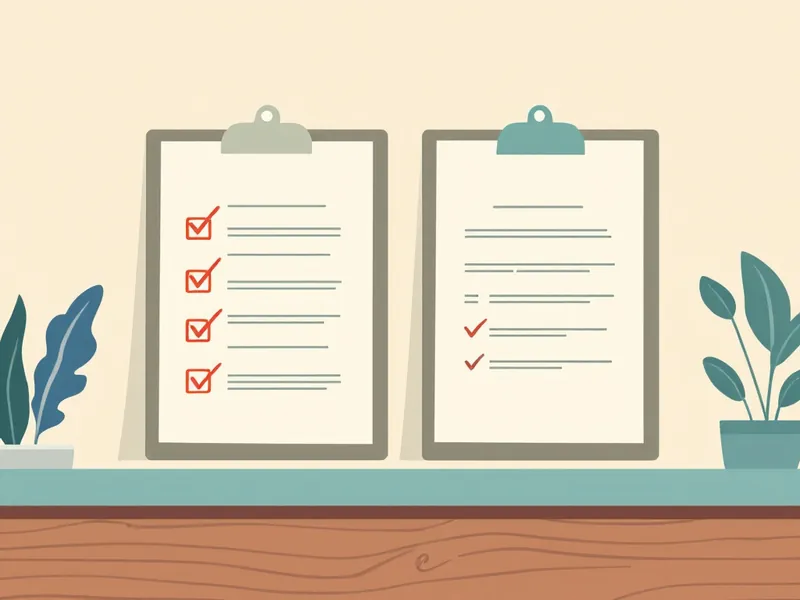
Licensing is mandatory, accreditation is not
This is the whole distinction in one line. A center without a license is operating illegally. A center without accreditation is simply one of the majority, including many excellent ones.
Licensing is a floor, accreditation is a bar
State licensing rules are written as minimums: how many children per adult, how food is stored, what the background check covers. Accreditation asks different questions, about curriculum, how teachers interact with children, how families are involved. The University of Utah's child care resource center frames it the same way: licensing protects, accreditation elevates.
Who does the checking
Licensing is enforced by a state agency with the power to restrict, suspend or revoke. Accreditation is granted by a national membership body and lapses if the program stops meeting the terms. One can shut a center down; the other cannot.
Which one you should verify first
License status, every time. It is the one that can be in trouble, the one that is public, and the one that exists for every provider you will consider.
What our directory shows about license status
We hold licensing records for 162,343 child care providers in our catalog. The first thing the data shows is that "licensed" is not a single word across the country, states use different labels for the same idea:
- Active: 132,902 providers
- Licensed: 24,674
- Registration: 2,635
- Permitted: 1,978
All four mean roughly the same thing: the provider is authorised to operate. If your state calls it "registered" rather than "licensed", that is vocabulary, not a downgrade.
The statuses worth worrying about
Far more useful is the small set of records where something is wrong. Across the same catalog we hold 153 providers whose status is not clean:
- 71 pending revocation
- 53 restricted
- 16 suspended
- 13 pending revocation and denial
That is roughly one in a thousand, rare, which is exactly why it is worth two minutes of checking rather than assuming. A center in good standing has nothing to hide about its status; one under restriction rarely volunteers it.
Inspection dates are public in many states
We hold a recorded last-inspection date for 24,217 providers. Not every state publishes them, and that unevenness is itself useful to know. If your state does publish, an inspection date years in the past is a question worth asking.
A note on what we do not publish: we do not report an accreditation percentage for our catalog. The accreditation field in bulk provider records is inconsistent and, in our data, not specific to early-childhood accreditation, publishing a share from it would be misleading. Accreditation should be verified per program, directly with the accrediting body.
How rare is accreditation, really?
NAEYC accredits over 7,000 programs nationwide. Against the scale of American child care that is a small slice, by NAEYC's own account, the share of accredited programs has never exceeded about 12% of early childhood programs in the country.
Two consequences follow, and both matter when you tour:
Most good centers are not accredited
If accreditation were your filter, you would rule out the large majority of programs, including plenty that are excellent. In rural areas and for home-based providers it can rule out nearly everything nearby.
Accreditation is a positive signal, never a requirement
Its absence tells you almost nothing. Its presence tells you the program volunteered for outside scrutiny and paid for it, which is genuine information, just not the only information.
The ten NAEYC standards, in plain terms

Accreditation is assessed against ten standards. Stripped of the official language, they ask:
1. Relationships
Do adults and children actually connect, and is the room warm rather than merely orderly?
2. Curriculum
Is there a real plan for what children learn, or is the day improvised?
3. Teaching
Do teachers adapt to how individual children learn?
4. Assessment of child progress
Is development tracked, and is what is tracked used to change anything?
5. Health
Beyond the licensing minimum: nutrition, hygiene practice, illness policy in daily use.
6. Staff competencies and qualifications
What teachers are trained in, and whether training continues after hiring.
7. Families
Whether families are treated as partners or as people who drop off and collect.
8. Community relationships
Whether the program connects children to services and resources beyond its walls.
9. Physical environment
Space, materials and safety as a learning environment, not just a compliant room.
10. Leadership and management
Whether the place is run well enough to sustain the other nine.
What it costs a program, and how long it lasts
The fee is not the main cost
NAEYC charges fees scaled to program size, and has reduced the upfront cost of initial accreditation. But the real expense for a center is staff time: self-study, documentation, and the changes the process forces.
The term is five years
Accreditation runs for a five-year term, with an annual report in between to confirm the program still complies. So a badge on the door is not permanent, it has a date attached.
Why the term matters to you
Ask when it was awarded and when it expires. A program in the final year of a term and a program that just renewed are in different places, and staff turnover in between can be substantial.
How to check whether a daycare is accredited
Go to the accrediting body, not the center's website
A logo in a footer is not verification. NAEYC publishes a searchable list of accredited programs; that list is the authority, and it is current.
Check the individual site, not the brand
This is where most parents go wrong. Accreditation is awarded to a specific program at a specific address, not to a national chain. Two centers under the same brand name, in the same city, can differ: one accredited, one not. So "is this chain accredited" is not an answerable question; "is this center accredited" is.
Ask for the certificate and the dates
Any accredited program can produce it in seconds. Hesitation is itself an answer.
How to check whether a daycare is licensed
This is the check that applies to every provider, and it is free.
Your state licensing agency publishes it
Every state runs a child care licensing lookup. The federal childcare.gov resource links through to each state's agency, which is the fastest way to find the right one rather than guessing at a department name.
What to look for beyond "yes"
- Status, active and clean, or restricted, suspended, pending revocation.
- Expiry, a license with a near date and no renewal noted is worth a question.
- Inspection history, where published, how recent and what was found.
- Complaints — some states publish substantiated complaints separately from inspections.
Who sets the rules in the first place
Licensing is run state by state, but it sits inside a federal framework: states that receive child care development funds administered by the federal Office of Child Care must meet baseline requirements on background checks, inspections and health and safety training. That is why state rules differ in detail yet rarely differ in substance.
Home-based providers follow different rules
Family child care homes are licensed under a separate, usually lighter framework, and in some states very small home providers are exempt from licensing entirely. Exempt is not the same as illegal — but it does mean nobody is inspecting, which is worth knowing before you decide.
If you cannot find a provider in the state list
Ask them directly for their license number and check it. An address with no record is the one situation that deserves real caution.
Is accreditation worth paying more for?

What you are actually buying
Compared with licensed-only programs, accredited ones are held to higher staff qualifications, a documented curriculum, ongoing child assessment and structured family engagement. Those are real differences in how a day runs.
Where the premium is not worth it
If the accredited option is across town and the unaccredited one is five minutes away, weigh the commute honestly — an extra forty minutes a day in a car seat is a real cost to a small child and to you.
What predicts your experience better than any badge
Staff turnover. A program with stable teachers who have been there for years will usually serve your child better than an accredited program losing staff every term. Ask how long the lead teacher in your child's room has been there — it is the single most revealing question on a tour.
The practical compromise
Treat accreditation as a tie-breaker between two options that already passed your own checks, not as the first filter you apply.
Other accreditations you will see
NECPA
The National Early Childhood Program Accreditation — another national option, common with centers that want external validation without NAEYC's scope.
NAC
National Accreditation Commission for Early Care and Education Programs, used by a range of center-based providers.
NAFCC
The accreditation designed specifically for family child care homes — the right one to look for if you are considering home-based care, since NAEYC accreditation is oriented to centers.
State quality rating systems (QRIS)
Most states run their own star or tier ratings, separate from both licensing and national accreditation. A four-star state rating may tell you more locally than a national badge, because it is scored against your state's own framework.
What changed in 2026

NAEYC has moved to a revised quality assessment and accreditation system. Programs whose term runs to March 2026 or later transition to the new standards when they renew, so during this period two programs can both be accredited under slightly different versions of the framework.
For a parent this changes little — but it does explain why a director may describe the process differently from what you read a year ago. Details of the transition are published on NAEYC's site.
Accreditation by state: what actually differs
People search for "daycare accreditation" alongside their state name, expecting state-specific accreditation rules. Here is the thing worth knowing before you search: accreditation is national, licensing is state-level. NAEYC applies the same standards in Florida as in Texas. What changes state by state is the licensing rule underneath it, and that is the part with real legal force.
What does change between states
- Ratios and group sizes, which is why the same accredited badge sits on top of different legal floors. Our state-by-state ratio table shows the spread.
- The word used for the licence: active, licensed, registered or permitted, depending on the state.
- What gets published: some states put inspection reports and complaint records online, others release almost nothing.
- State quality ratings (QRIS), which are their own star systems and are not NAEYC accreditation.
Where we hold the most licence records
Licence status in our catalog, by the states with the deepest coverage:
| State | Providers with licence status |
|---|---|
| NY | 19,218 |
| TX | 15,142 |
| MA | 9,050 |
| CA | 8,879 |
| FL | 7,683 |
| CO | 7,614 |
| PA | 6,410 |
| IL | 5,200 |
How to check the rule where you live
Go to your own state agency rather than a national summary, since the summary will be an average of fifty different rules. The federal childcare.gov lookup routes you to the right one.
Montessori, Reggio and NAEYC are not the same thing
A common mix-up, because all three appear as badges on a center door. They answer different questions.
NAEYC is a quality assessment
It measures how a program runs against ten standards. It says nothing about which teaching philosophy the program follows.
Montessori is a teaching method
It describes how children are taught: mixed-age classrooms, self-directed work, specific materials. The word itself is not trademarked, so any program can use it. Montessori-specific credentialing bodies exist separately, and a Montessori program may or may not also hold NAEYC accreditation.
Reggio Emilia is an approach, not a certification
There is no accrediting body issuing a Reggio licence. A program describing itself as Reggio-inspired is describing its philosophy.
What this means when comparing two centers
A Montessori program without NAEYC accreditation and an accredited conventional program are not ranked against each other by any single scale. Decide the teaching approach you want first, then use accreditation and licence status as quality checks within that choice.
Finding accredited or licensed care near you
Start from the licence, not the badge
Every provider you will consider holds a licence; only a minority hold accreditation. Searching by licence status gives you a real list, then accreditation narrows it.
Use the state lookup for status and history
State agencies publish licence status and, in many states, inspection history. That is the authoritative source for whether a specific address is in good standing right now.
Use our directory for the shortlist
We hold licence records for 162,343 providers across the country, searchable by state and by city, which is usually a faster way to build a list of candidates before you verify each one with the state.
Then verify the accreditation itself
Check the specific address in the accrediting body’s own list rather than trusting a logo on a website, since accreditation belongs to a program at an address and expires on a date.
Frequently asked questions
Is NAEYC accreditation required?
No. Licensing is legally required; accreditation is entirely voluntary. Most programs in the country are not accredited, and many of them are good.
How long is NAEYC accreditation valid?
Five years, with an annual report in between confirming the program still meets the standards. Ask for the award and expiry dates rather than assuming a badge is current.
Is KinderCare, Goddard or Primrose NAEYC accredited?
That question cannot be answered at the brand level. Accreditation belongs to an individual program at an individual address, so two locations of the same chain can differ. Check the specific center in NAEYC's list.
How do I check if a daycare is licensed online?
Through your state's child care licensing agency, which publishes a searchable lookup. Start at childcare.gov to reach the right agency for your state, then search by provider name or address.
What is the difference between licensed and registered?
Mostly vocabulary. States use different labels — active, licensed, registered, permitted — for essentially the same authorisation. What matters is that the status is current and clean.
What are the NAEYC ratios?
NAEYC sets group-size and ratio expectations that are generally stricter than state licensing minimums, which is one of the concrete ways accredited programs differ. Your state's licensing ratios are the legal floor; accredited programs commit to going beyond it.
How much does NAEYC accreditation cost a center?
Fees are scaled to program size and NAEYC has lowered the upfront cost of initial accreditation. The larger cost for most centers is staff time for self-study and documentation, which is part of why smaller programs often skip it.
Does accreditation mean better teachers?
It means higher required qualifications and ongoing professional development. It does not guarantee stability — ask about turnover separately, because a qualified teacher who leaves in March does not help your child in April.
Is an unaccredited daycare unsafe?
No. Safety is governed by licensing, which every legal provider holds. Accreditation is about quality beyond the safety floor, not about whether a program is safe to use.