
Dedicated autism daycares are rare, so daycare for a child with autism usually means an ordinary licensed program with added support. A private center generally cannot turn your child away because of the diagnosis, and therapy can often come to the classroom instead of the other way round. This guide covers what kinds of care exist, what the law requires of a program, how ABA and early intervention fit into a daycare day, and six ways families pay for it.
The most recent CDC surveillance report we could find puts autism at about 1 in 31 eight-year-olds across its 16 monitoring sites (MMWR Surveillance Summaries, April 2025, 2022 data). That is roughly three children in every hundred.
Is there such a thing as an autism daycare? What seven state licensing rolls show
Yes, but there are very few of them. We checked the licensing records in our own directory to see how many licensed programs carry a disability-related term in their name.

The numbers from our own directory
Of 56,445 licensed child care programs in the seven states whose registries we carry, 55 carry a disability-related term in their licensed name. That is about one program in a thousand. Only 5 use the words autism, autistic or ABA.
| State | Licensed programs in directory | Disability-related term in the name |
|---|---|---|
| New York | 18,213 | 30 |
| Texas | 14,501 | 7 |
| Massachusetts | 9,025 | 2 |
| Pennsylvania | 6,398 | 7 |
| Colorado | 4,481 | 5 |
| Washington | 2,573 | 4 |
| Delaware | 1,254 | 0 |
| Total | 56,445 | 55 |
What this number does and does not mean. It is a count of names only. Licensing registries do not record whether a program enrolls autistic children, so an ordinary center with years of inclusion experience is invisible in it. In the other direction, the 55 include a few camps and school-age programs, and words such as "sensory", "spectrum" and "inclusive" do not always signal a disability program. The count also covers seven states, not the country. What it does show is the practical picture for a parent searching for a daycare or preschool for kids with autism: in most places in these states the licensing roll shows none by name, and the realistic choice is a regular licensed program plus services that come to your child. The full list of the 55 programs is at the end of this guide.
Four kinds of care for an autistic child, compared
Care for a young autistic child falls into four settings, and many families combine two of them across the week.
| Setting | Who runs it | Typical hours | Who pays | Best fit |
|---|---|---|---|---|
| Inclusive regular daycare or preschool | Private center or home-based provider, state licensed | Full working day | Parents, child care subsidy | Families who need full-day care and a child who can be in a group with support |
| Specialized or therapeutic preschool | Nonprofit or agency such as Easterseals or a cerebral palsy association | Often school hours | Varies: a school district or early intervention placement, or tuition | Children who need therapists on site and small groups |
| Center-based ABA program (often called "ABA daycare") | ABA therapy provider; a clinic, often without a child care license | Half or full day, by authorized therapy hours | Health insurance or Medicaid, with medical necessity | Children with a prescription for intensive behavioral therapy |
| Public preschool special education or Head Start | School district or Head Start grantee | Part day in many districts | Free to eligible families | Children 3 to 5 with an IEP; income-eligible families |
The table shows typical patterns, and local programs vary. Two points about it save families a lot of confusion. First, an ABA center is a health service and is billed that way. It is not a substitute for licensed child care unless the provider also holds a child care license, so ask to see it. Second, the public preschool option often covers only part of the day. Working parents then pair it with a regular daycare for the rest of the day, which is why the inclusive daycare row matters for almost everyone.
Can a daycare refuse an autistic child?
A privately run daycare generally cannot refuse a child because the child has autism. Child care centers are covered by Title III of the Americans with Disabilities Act, and the Department of Justice spells out what that means in its Commonly Asked Questions about Child Care Centers and the ADA. The points below quote that document.
- Who is covered. "Almost all child care providers, regardless of size or number of employees, must comply with title III of the ADA. Even small, home-based centers that may not have to follow some State laws are covered by title III."
- The one exemption. Programs "actually run by religious entities such as churches, mosques, or synagogues" are not covered. A private center that only rents space from a church generally is covered.
- The basic rule. "Centers cannot exclude children with disabilities from their programs unless their presence would pose a direct threat to the health or safety of others or require a fundamental alteration of the program."
- No assumptions. The center "must make an individualized assessment" and "cannot just assume that a child's disabilities are too severe for the child to be integrated successfully into the center's child care program."
- Insurance costs. "Higher insurance rates are not a valid reason for excluding children with disabilities from a child care program."
- No surcharge. "If the service is required by the ADA, you cannot impose a surcharge for it."
- Diapers past the usual age. Centers that already diaper younger children "must reasonably modify their policies and provide diapering services for older children who need it due to a disability."
- Age group. "Under most circumstances, children with disabilities must be placed in their age-appropriate classroom, unless the parents or guardians agree otherwise."
Where the law stops
The same document sets limits that parents should know before a difficult conversation with a director.
- One-to-one aides. A child cannot be excluded "solely because the child needs one-to-one care", but "the ADA generally does not require centers to hire additional staff or provide constant one-to-one supervision of a particular child with a disability." If an aide is needed, it is usually arranged by the family or through a public program.
- Waiting lists. The law "does not require providers to take children with disabilities out of turn."
- Behavior that hurts others. The guidance uses biting and hitting as its example: "If reasonable efforts have been made and the child continues to bite and hit children or staff, he may be expelled from the program even if he has a disability." The key words are reasonable efforts: the program has to try first.
The Justice Department notes that this guidance is informal and not legally binding by itself. Programs run by government agencies, including Head Start, fall under Title II of the ADA instead. Head Start has its own rule as well: a program "must not deny enrollment based on a disability or chronic health condition or its severity" (45 CFR 1302.14). For the wider picture across all disabilities, see our guide to childcare for children with special needs.
ABA therapy at daycare: how it works when the therapist comes to the classroom
ABA therapy at daycare means a behavior technician works with your child inside the regular classroom for part of the day. The technician follows a plan written by a supervising analyst. It is sometimes called daycare based ABA or ABA in community settings. Whether it can happen depends on three parties: the insurer or Medicaid plan that authorizes the hours, the ABA provider, and the daycare, which has to agree to let an outside adult work in its room.

We found no federal rule that tells a child care program it must admit a private therapist. We then looked at the licensing rules of the seven states in our directory and found relevant language in three. For New York, Massachusetts, Colorado and Delaware we could not confirm a rule either way.
- Pennsylvania. The operator "shall permit an adult individual who provides specialized services to a child with special needs to provide those services on the facility premises as specified in the child's IEP, IFSP or written behavioral plan" (55 Pa. Code § 3270.17).
- Texas. Centers must ensure that a child who receives early intervention or special education services "can receive those services from a qualified service provider at your operation, with parental request and approval" (Minimum Standards for Child-Care Centers, § 746.2202).
- Washington. The rule is narrower. It lists "the child's therapist or health care provider" among the people a parent may authorize, in writing or by phone, to be with the child unsupervised (WAC 110-300-0345).
None of these rules names ABA. Pennsylvania's speaks of services in a child's IEP, IFSP or written behavioral plan, and Texas's of early intervention and special education services, so do not assume they oblige a center to admit a privately arranged ABA therapist. Wherever you live, ask the program for its policy before you enroll, and ask your state licensing agency if the answer is no.
Five questions to settle before the first session
- Does the center allow outside therapists in the classroom, and is there a written policy?
- What does the center need from the therapist: background check, immunization records, liability insurance?
- Where will sessions happen, in the group or in a separate room?
- Who talks to whom? Ask for a short weekly exchange between the lead teacher and the supervising analyst.
- What happens on days the therapist is absent? Your child should still be welcome.
Autism preschool: what changes on the third birthday
The third birthday is when responsibility for services moves from your state's early intervention program to the public school system. Before three, services run under Part C of the Individuals with Disabilities Education Act. From three through five they run under Part B, which is where the term autism preschool usually comes from.
| Birth to third birthday | Ages 3 through 5 | |
|---|---|---|
| Program | Early intervention (IDEA Part C) | Preschool special education (IDEA Part B, Section 619) |
| Who runs it | State lead agency, varies by state | Public school system |
| The plan | IFSP, Individualized Family Service Plan | IEP, Individualized Education Program |
| Where services happen | "Natural environments", meaning home or community settings typical for a child that age | With nondisabled children "to the maximum extent appropriate" |
| Deadline | Evaluation and first IFSP meeting within 45 days of referral | IEP meeting within 30 days of the eligibility decision; a plan in effect by the third birthday |
| Cost to family | No cost under the federal rule, unless state law sets family fees such as a sliding scale | Free |
Sources: 34 CFR 303.26 (natural environments), 303.310 (45-day timeline), 300.101, 300.114 and 300.323.

A daycare classroom is a community setting typical for a toddler, so an early intervention speech or developmental therapist can often see your child there. You can ask for an evaluation yourself, before any diagnosis. The CDC notes that pediatricians are advised to screen specifically for autism at the 18 and 24 month well-child visits (CDC, screening and diagnosis), but a parent can contact the state early intervention program directly without waiting for those visits.
IEP goals for an autism preschool placement
An IEP for a preschooler with autism normally sets measurable yearly goals in a handful of areas: communication, social interaction and play, behavior and self-regulation, self-help skills such as toileting and eating, and early learning skills. A goal has a skill, a condition and a measure. Here is a sample of the format, not a template to copy: "During free play, with one adult prompt, the child will hand a toy to a classmate and wait for a turn in 4 of 5 observed chances." If you want the plan to reach into daycare hours, ask that the IEP list the daycare as a place where services or consultation happen.
Free and lower-cost daycare for an autistic child: six funding routes
No single program pays for daycare because a child is autistic, but six public routes cover parts of the cost, and they can be combined.

| Route | What it covers | The rule |
|---|---|---|
| Head Start and Early Head Start | Free program for income-eligible families | At least 10 percent of a program's actual enrollment must be children eligible for services under IDEA (45 CFR 1302.14) |
| Child care subsidy (CCDF) | Part of the daycare bill at a provider you choose | States "shall give priority" to children with special needs; each state defines the term (45 CFR 98.46) |
| Public preschool special education | Free preschool hours and therapies from age 3 | IDEA Part B, see the section above |
| Medicaid (EPSDT) | Medically necessary treatment for children under 21, which can include ABA | CMS bulletin of July 7, 2014 |
| Supplemental Security Income (SSI) | Monthly cash, up to $994 in 2026 at the federal maximum | Childhood listing 112.10 for ages 3 to 18, listing 112.14 under age 3; parents' income and resources are counted |
| Child and Dependent Care Credit | Tax credit on work-related care expenses | IRS Publication 503 |
A few cautions keep expectations realistic. Subsidy priority is a place in the queue, not a guaranteed spot. The CMS bulletin requires states to cover medically necessary services for children with autism and names ABA as "one particular treatment modality"; it does not order every state to pay for ABA in every case. Medicaid and insurance pay for therapy, not for child care as such. And the tax credit normally ends at age 13, but IRS Publication 503 also counts a person who "wasn't physically or mentally able to care for themselves" and lived with you for more than half the year, so some families keep the credit for an older autistic child.
On private insurance, Boston University's Center for Innovation in Social Work and Health reports that all 50 states and the District of Columbia have passed laws on insurance coverage of ABA for autism, and that companies that self-insure are exempt from those state laws (BU CISWH). Ask your employer whether your plan is self-insured before you count on it.
For the subsidy application itself, see our guide to child care assistance programs and the subsidy eligibility checker. The differences between Head Start and private care are laid out in Head Start vs daycare, and the tax side in our dependent care account guide.
What an autism-friendly daycare looks like on a tour
An autism-friendly daycare is one where the room, the routine and the staff already work for a child who needs predictability. It does not need a special label, and you can see most of it in a 30-minute visit. Programs that take neurodiversity in early childcare seriously tend to show it in small practical details.

In the room
- A picture schedule at child height that staff actually point to when the activity changes.
- A quiet corner a child may go to without it being a punishment.
- Moderate noise and light. Stand in the room for five minutes during free play and judge it yourself.
- Stable groups. Ask how often children are moved between rooms to balance ratios.
- A secure exit. Look at door latches and the playground fence if your child tends to run.
Questions for the director
- Have you enrolled autistic children before, and what did you change for them?
- What training have the teachers in my child's room had, and when?
- How do you handle a meltdown? Listen for a calm description, not a discipline policy.
- How do you communicate with a child who does not speak yet?
- Will you allow my child's therapist to observe or work in the classroom?
- Will a teacher attend or send notes to the IFSP or IEP meeting?
- What curriculum does the preschool room follow, and how is it adapted for autistic kids and other neurodivergent children?
- Under what circumstances have you asked a family to leave?
The last question matters most. A program that has never thought about it, or answers with "we are not equipped", is telling you how the first hard week will go. More general questions are in our list of daycare interview questions, and you can print the tour checklist to take along.
Naps, meals and transitions: the daily problems and what programs do about them
Most daycare difficulties for autistic children cluster around three moments of the day: nap, meals and changes of activity. None of the ideas below is medical advice. They are adjustments to raise with the teacher and with your child's therapist, who knows what works for your child.
How to get an autistic child to nap at daycare
Start by telling the teacher exactly how sleep happens at home: the words you use, the blanket, the order of steps. Then ask for the same cot in the same spot every day, away from the door, and for a rest routine that repeats without variation. Send a familiar blanket or soft toy. If your child does not sleep, ask what the program allows instead, for example a quiet activity on the cot. A set of books or a quiet toy kept only for that time can make rest tolerable.
Meals
Tell the program in writing which foods your child accepts and how they are served. Ask whether you may send food from home, and whether foods can be kept separate on the plate. Some programs need a note from your child's clinician before they substitute foods, so ask what paperwork they want.

Transitions and drop-off
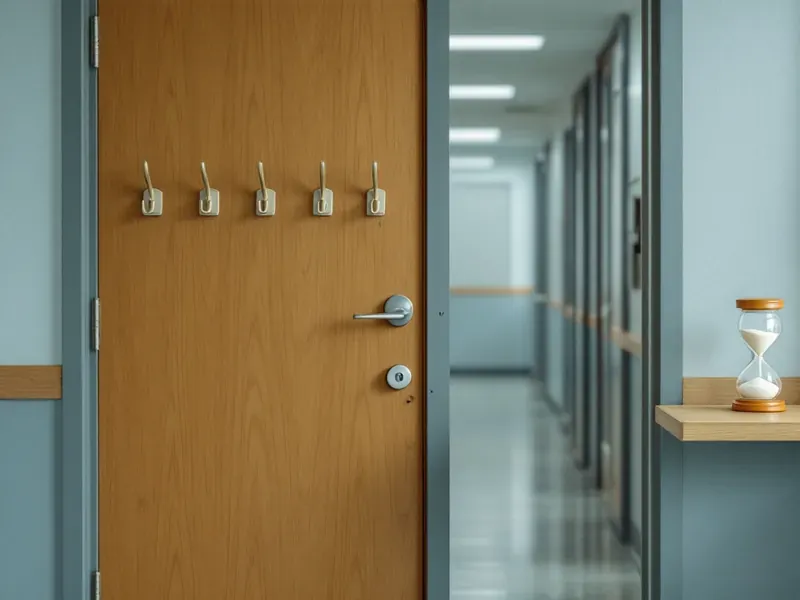
Changes of activity are easier when they are announced the same way every time. Ask the teacher to give a warning before each change and to show the next picture on the schedule. A sand timer on a shelf, a set song for clean-up and a fixed order at drop-off (coat hook, wash hands, same first activity) are common tools. Keep your own goodbye short and identical each morning.
Sensory needs
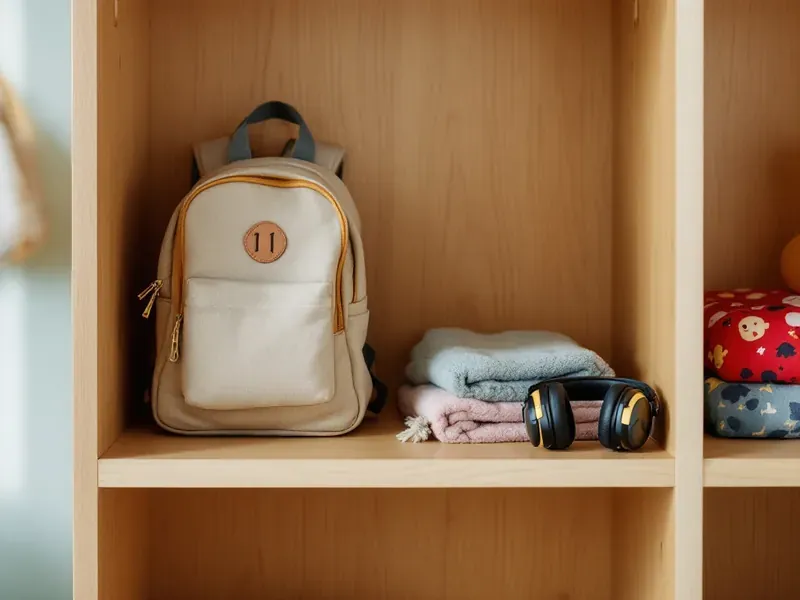
Agree in advance what your child may use and when: ear defenders during music, a chewable item, a few minutes in the quiet corner. Label everything and keep a spare set in the cubby so that the tools are there on the day they are needed.

When a regular daycare is not working
When a regular daycare is not working, the first step is a written request for a meeting, not a withdrawal. If the program calls you to pick up early or hints that your child should leave, slow the process down. The ADA guidance quoted above expects a center to make reasonable efforts before it excludes a child.
- Ask for a meeting, not a hallway talk. Bring the teacher, the director and, if you have one, the early intervention coordinator or therapist.
- Ask what was tried. Which changes did staff make, for how long, and what happened?
- Offer specific supports. A therapist observation, a written behavior plan, a shorter day for two weeks.
- Request an evaluation if you have not. Early intervention under 3, the school district from 3. Both are free to request.
- Know where to complain. If you believe your child was excluded because of disability, the Justice Department accepts ADA complaints through ada.gov. Licensing complaints go to your state child care agency.
Sometimes a different setting really is the better answer: a smaller home-based program, a therapeutic preschool, or public preschool in the morning with family care in the afternoon. Moving on is not a failure. The warning signs that a program itself is the problem are covered in our director interview red flags.

Licensed programs in our directory that name a disability focus
These are the 55 programs behind the count above, taken from state licensing records, with capitalisation tidied. Some are camps or school-age programs. A place on this list is not a recommendation, and a name is not proof of what a program offers today. Open the listing to see the license status and call the program before you plan around it.
Your state is not here, or nothing is near you? Search all licensed programs in New York, Texas, Pennsylvania and every other state, then use the tour questions above.
Frequently asked questions
Can a daycare refuse a child with autism?
A private daycare generally cannot refuse a child because of autism. Under ADA Title III a center may exclude a child only if the child would pose a direct threat to others or if including the child would fundamentally alter the program, and it has to make an individual assessment first. Programs run by religious organizations are exempt.
Is there free daycare for an autistic child?
There is no program that makes daycare free because of an autism diagnosis. Free options are Head Start for income-eligible families and public preschool special education from age 3, which is usually part day. Child care subsidies give children with special needs priority, and Medicaid or insurance can pay for therapy delivered during the day. Start with the subsidy checker.
What is the difference between an ABA daycare and a regular daycare?
An ABA center delivers behavioral therapy that a clinician has prescribed, and it bills health insurance or Medicaid for authorized hours. A regular daycare is a licensed child care program paid by parents or a subsidy. Some children attend both in one week. Before relying on an ABA center for child care, ask whether it holds a state child care license.
Does my child need a diagnosis to get help at daycare?
No. Early intervention under age 3 and preschool special education from age 3 start with an evaluation of your child's development, and a parent can request that evaluation directly without waiting for a medical diagnosis. For children under 3 the evaluation and first planning meeting must be completed within 45 days of the referral, with limited exceptions.
Can a daycare charge more for a child with autism?
Not for accommodations the ADA requires. The Justice Department's guidance says a center cannot impose a surcharge for a service the law requires; it may charge only when it goes beyond what the law requires. A center may charge for extras that go beyond the law, and it is generally not required to pay for a one-to-one aide.
Should I tell the daycare about the diagnosis before enrolling?
That is your decision, and telling the program early usually works in your child's favor. Staff can prepare the room and the routine, you can test how the director responds, and any later request for accommodations rests on a record that the program knew what your child needed from the first day.
Is a small home daycare or a large center better for an autistic toddler?
Neither is better by rule. A home-based program offers a small, steady group and one caregiver, which some autistic toddlers find easier. A center offers more staff, more structure and usually more experience with visiting therapists. Judge the specific room and the specific adults, using the tour questions above, and ask both about staff turnover.
Sources
- U.S. Department of Justice, Commonly Asked Questions about Child Care Centers and the ADA (last updated February 28, 2020).
- CDC, Prevalence and Early Identification of Autism Spectrum Disorder, ADDM Network, 16 Sites, 2022, MMWR Surveillance Summaries, April 17, 2025.
- IDEA regulations: 34 CFR Part 303 (early intervention) and 34 CFR Part 300 (special education).
- Head Start Program Performance Standards, 45 CFR 1302.14; Child Care and Development Fund, 45 CFR 98.46.
- CMS, Clarification of Medicaid Coverage of Services to Children with Autism, July 7, 2014.
- Social Security Administration, Cost-of-Living Increase and Other Determinations for 2026, Federal Register; childhood listings in 20 CFR Part 404, Subpart P, Appendix 1.
- IRS, Publication 503, Child and Dependent Care Expenses (2025 edition).
- DaycareHub directory count, October 2026. Method: editorial methodology.
Last reviewed: October 2026. This guide is general information for parents and is not legal or medical advice. Rules differ by state and change; check the linked source before you act on a deadline or a dollar figure.