
The questions to ask a daycare fall into seven groups: hours, license and inspections, staff, safety and health, the daily routine, money, and what happens before the first day. This guide lists the questions for a tour or interview, gives a benchmark where a published one exists, and marks the answers you can check yourself in public records. There are separate lists for infants and for in-home daycares.
Print the short list, take notes at every potential daycare you are touring, and ask the same questions at each one. The value is in comparing answers, not in any single one.

The 12 questions that matter most
If your time with the director is short, start with these twelve questions. The sections below go through them in detail.
- What are your exact hours, and what happens if I am late for pickup?
- Can I see your license and your most recent inspection report?
- How many children and how many adults will be in my child's room?
- How long have the teachers in that room worked here?
- Has every adult who is alone with children completed a full background check?
- Can I drop in at any time without calling first?
- When do you send a sick child home, and when can the child return?
- How do you handle biting, hitting and tantrums?
- What does a normal day look like, hour by hour?
- How will I hear about my child's day, and how fast do you call about an injury?
- What is the full cost, including fees, and when did you last raise tuition?
- Why have you asked a family to leave in the past?
Want the same list on paper? Our printable tour checklist has room for notes on three programs.
Hours and pickup: what 10,492 licensed programs publish
Ask about hours first: in the two state registries we counted, 44% of programs close before 6:00 pm. The figures come from the opening and closing times that programs report to the licensing agencies of Texas and Delaware.

The numbers from our own directory
Of 10,492 licensed programs in Texas and Delaware with published hours, 44.0% close before 6:00 pm and only 8.3% open on Saturday.
| Published hours | All programs | Centers | Home-based |
|---|---|---|---|
| Open by 6:30 am | 42.1% | 47.0% | 36.0% |
| Close before 6:00 pm | 44.0% | 37.4% | 52.2% |
| Close at exactly 6:00 pm | 33.9% | 37.7% | 29.2% |
| Close after 6:00 pm | 22.1% | 24.9% | 18.6% |
| Open on Saturday | 8.3% | 3.6% | 14.2% |
| Open on Sunday | 3.5% | not split | not split |
What this means and what it does not. These are the hours programs report to the state, in two states, not a national sample and not a promise about any one program. The pattern is still useful. If your workday ends at 5:30 pm with a 30-minute commute, nearly half of the programs in these registries are closed before you arrive. Home-based programs close earlier more often, but they are four times as likely as centers to offer Saturday care. The two states differ: 41.8% of Texas programs and 61.0% of Delaware programs close before 6:00 pm, and all of the Saturday care in this count is in Texas (9.4% there, none in Delaware). You can filter by state in our directory for Texas and Delaware. For one city in full, see the lists of weekend daycares in Houston and 24-hour and overnight daycares in Houston.
Questions to ask about hours
- What is the earliest drop-off time and the latest pickup time?
- What is the late pickup fee, and after how many late pickups do you end the contract?
- Which days are you closed this year? Ask for the written calendar.
- Do I pay for holidays, closures and weeks when my child is away?
- What happens when the program closes for weather or when a home-based provider is ill?
Questions about the license and inspection record
Ask to see the license and the latest inspection report, then check both online before you decide. Federal rules require states to post inspection results for licensed and subsidy-eligible providers, so this is an answer you can usually verify.
What to ask
- Are you licensed, registered or license-exempt, and for how many children?
- When was your last inspection, and what did it find?
- What did you change after it?
- Have there been any substantiated complaints in the past three years?
- Where can I read your inspection reports online?
What you can check yourself
ChildCare.gov, the federal consumer site, states it plainly: "Federal law requires states and territories to post the results of child care monitoring and inspection reports online" (ChildCare.gov, monitoring and inspections). The underlying rule asks for "a minimum of 3 years of results where available", including the date of the inspection, areas of compliance and non-compliance, and results "due to major substantiated complaints" (45 CFR 98.33). Start from the state and territory resources page and pick your state.
The same federal rules call for licensed programs that are eligible to serve subsidized children to receive "not less than annually, an unannounced inspection" (45 CFR 98.42). A director who cannot remember the last inspection has told you something as well.
What a license does not tell you
ChildCare.gov is direct about the limit: "Although child care licensing does not guarantee quality, it does set minimum health and safety requirements for child care programs." Treat the license as the floor and use the rest of this list to judge everything above it. Our guide to choosing a daycare center covers quality ratings and accreditation.

Questions about staff: ratios, turnover and background checks
About staff, ask three things: how many adults are with the children, how long teachers stay, and how everyone is screened and trained.
Ratios and group size
- How many children are in my child's group, and how many adults are with them?
- Is that ratio kept at nap time, during lunch breaks and in the last hour before closing?
- Do you combine rooms early in the morning or late in the afternoon?
There is no single federal ratio. Each state sets its own, and two professional benchmarks give you something to compare with:
| Age | NAEYC suggested best practice (2018 table) | Caring for Our Children, 4th edition |
|---|---|---|
| Infants | 1 adult to 4 children, group of 8 (birth to 15 months) | 1 adult to 3 children, group of 6 (12 months and under) |
| Toddlers | 1 to 6, group of 12 (12 to 36 months) | 1 to 4, group of 8 (13 to 35 months) |
| Preschool | 1 to 10, group of 20 (30 months to 5 years) | 1 to 7, group of 14 (3-year-olds); 1 to 8, group of 16 (4-year-olds) |
Sources: NAEYC staff-to-child ratio table; Caring for Our Children, standard 1.1.1.2. For the legal minimum where you live, see staff-to-child ratios by state.
Turnover
- How long has the lead teacher in this room worked here?
- How many teachers left in the past twelve months?
- Who covers when a teacher is sick, and do the children know that person?
A federal study gives you a yardstick. Using 2019 data, the Office of Planning, Research and Evaluation found that 44% of centers had no teacher turnover that year, while one-third had high turnover, defined as more than 20% of teachers leaving within twelve months (OPRE Report 2023-061). If more than one in five teachers left last year, the program is in that high group.
Background checks and training
- Has every staff member completed a fingerprint-based background check?
- Does a new hire ever work alone with children before the check is finished?
- Who on duty today is certified in pediatric first aid and CPR?
- How many hours of training do teachers complete each year?
The federal rules that states follow for licensed, registered and subsidy-eligible providers describe a full check: an FBI fingerprint check, the national sex offender registry, and state criminal, sex offender and child abuse registries. It must be repeated "not less than once during each 5-year period", and a new hire may start once one of the first checks has come back but "must be supervised at all times" by someone who has passed until the rest are complete (45 CFR 98.43). For providers that serve subsidized children, states must also set training on eleven health and safety topics, among them safe sleep, medication, allergic reactions, emergency plans and "pediatric first aid and cardiopulmonary resuscitation" (45 CFR 98.41). State rules set the annual hours. Texas, for example, requires 24 clock hours a year for each caregiver and 30 for a center director (Texas Minimum Standards for Child-Care Centers).
Questions about safety, health and sick days
On safety, ask how visitors are controlled, what the emergency plan is, how medication and allergies are handled, and when a sick child is sent home. Ask how each thing is done, not whether it is done.

Access and pickup
- How do visitors get into the building, and who lets them in?
- How do you confirm that the person picking up my child is allowed to?
- Can I visit at any time without notice?
On the last question, look for a yes and check your own state's rule. Texas spells it out as a parent's right to "enter and examine your center during its hours of operation without advance notice". Federal subsidy rules ask states to make sure providers give parents "unlimited access to their children" during normal hours (45 CFR 98.31). That federal rule covers providers paid through the subsidy program, and your own state's licensing rules set the standard for everyone else.
Emergencies and injuries
- What is your plan for fire, severe weather and a lockdown, and how often do you practice?
- Where would you take the children if you had to leave the building, and how would I be told?
- When a child is hurt, who calls me and how soon?
- Do I get a written incident report the same day?
Medication and allergies
- Who gives medication, where is it stored, and what form do I sign?
- How does every adult in the room, including a substitute, know about my child's allergy?
- Where is the emergency medication kept during outdoor play and field trips?
Illness
- Which symptoms mean my child has to stay home or be picked up?
- How long after a fever or vomiting can a child come back?
- How do you tell parents about a contagious illness in the room?
Ask for the written policy and compare it with the usual rules in our guide to daycare sick policies.

Questions to ask a daycare for infants
When touring a daycare for an infant, ask about sleep, feeding, diapering and how many babies one adult looks after. On sleep there is a clear published standard to compare the answers with.
Sleep
- How do you put babies down to sleep, and on what?
- What is in the crib with the baby?
- What do you do when a baby falls asleep in a swing, bouncer or car seat?
- How often does someone check on sleeping babies?
- When were your cribs bought?
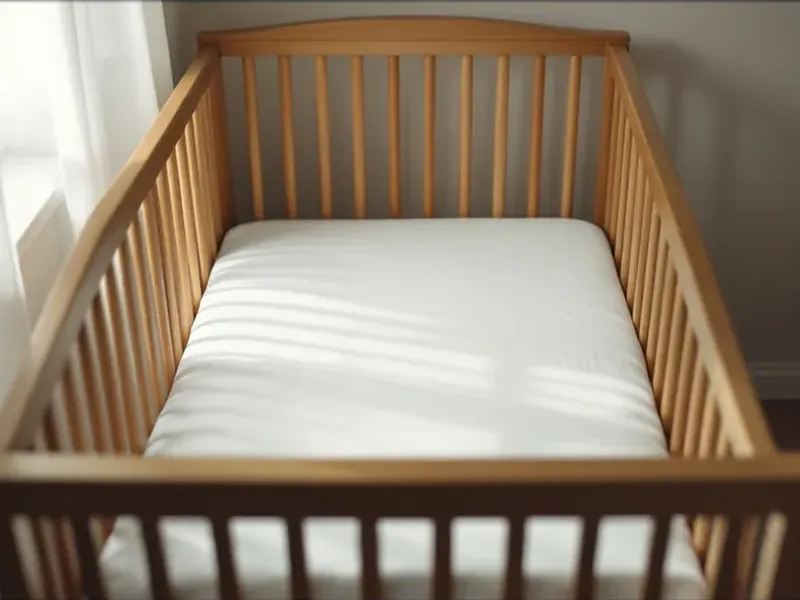
The answers should match the American Academy of Pediatrics guidance for parents: "Place your baby on their back for all naps & at night", "Choose a firm, flat sleep surface for sleep", and "Keep soft objects & loose bedding out of your baby's sleep area". The AAP adds that "any surface that inclines more than 10 degrees isn't safe for your baby to sleep on" (HealthyChildren.org, a parent's guide to safe sleep). On cribs, the federal safety standards have applied to "child care facilities, family child care homes" since December 28, 2012, and they prohibit traditional drop-side designs (Federal Register, crib safety standards).
Feeding
- Do you feed on my baby's schedule or on the room's schedule?
- How do you label, store and warm breast milk and formula?
- Are babies held for bottles?
- May I come in to nurse?
- How do you start solid foods, and who decides when?

Diapering and daily care
- How often are diapers checked, and where are they changed?
- How do staff clean their hands and the changing surface between babies?
- How much time do babies spend on the floor, and how much in seats or swings?
- Will one teacher be my baby's main caregiver?
- What is the youngest age you take, and how is care different for newborns?
- What will the daily report tell me about feeds, naps and diapers?

Infant ratios
Ask for the number of babies per adult and the size of the whole group, then compare with your state's rule. Texas allows one caregiver for 4 infants under 12 months, with a group of up to 10. The benchmarks in the table above are 1 to 4 with a group of 8 (NAEYC) and 1 to 3 with a group of 6 (Caring for Our Children). More on this age in infant daycare: what parents need to know and on timing in when to start daycare.
Questions to ask an in-home daycare
For an in-home daycare, add questions about who else is in the house, who covers for the provider, and which rooms the children use. Everything above still applies.

The household
- Who lives here, and who visits during the day?
- Has every adult in the home had a background check?
- Are there pets, a pool, a trampoline or firearms on the property, and how are they secured?
- Does anyone smoke or vape in the house or car?
For licensed, registered and subsidy-eligible homes there is a federal benchmark for the background check question. The rule counts as staff "any individual residing in a family child care home who is age 18 and older" (45 CFR 98.43).
Coverage and numbers
- How many children are here on a typical day, and what ages?
- Do your own children count in that number?
- Who looks after the children if you are sick or have an appointment?
- Do you ever leave the children with an assistant, and has that person been checked?
- Do you drive the children anywhere? In which vehicle and with which car seats?
References
Ask for the phone numbers of two current families and one family that has moved on. Useful questions for a reference:
- How long was your child there, and why did you leave?
- How did the provider handle a problem or a disagreement?
- How often did the program close without warning?
- Would you enroll a second child there?
Questions about the day: routine, learning and discipline
Ask the teacher to walk you through one ordinary day, from drop-off to pickup, and listen for a clear schedule.

Schedule and play
- What does the day look like, hour by hour?
- How much time is spent outdoors, and what happens in bad weather?
- How much of the day is free play, and how much is led by the teacher?
- Do you use screens? For what and for how long?
- Do you follow a curriculum, and how do you track what my child is learning?

Naps and meals
- When is nap time, and what do children do if they do not sleep?
- Do you provide meals and snacks? May I see this week's menu?
- How do you handle a child who will not eat?
- Do you take part in the Child and Adult Care Food Program?
The last question matters because meals served under that federal program "must contain, at a minimum, the indicated components" set in the regulation (7 CFR 226.20).

Discipline and upset children
- What do you do when a child bites or hits?
- Do you use time-out? At what age and for how long?
- How do you comfort a child who cries at drop-off?
- When would you call me about behavior, and what would we do next?
Listen for specifics. A teacher who describes what happened last week tells you more than a policy statement.
Potty training and toddlers
- Do you help with potty training, and do you follow what we do at home?
- Must a child be trained before moving to the next room?
- How and when do children move up to the next age group?
Communication
- How will I hear about my child's day: an app, a paper sheet, a talk at pickup?
- Do you send photos, and who else can see them?
- How often do we sit down to talk about my child's development?
- Who do I speak to if I am unhappy with something?
Questions about money and the contract
Ask for the full yearly cost in writing, not the weekly rate, so that fees, paid closures and deposits are all on one page.
- What is the tuition for my child's age, and when does it drop as my child gets older?
- Which fees come on top: registration, supplies, meals, activities, late payment?
- Is there a deposit, and is it refundable?
- When did you last raise tuition, and by how much?
- Is there a sibling discount?
- Do you accept child care subsidies?
- How much notice must I give to leave, and how much notice do you give families?
- Why have you asked a family to leave in the past, and what did you try first?
- Is there a waiting list, how long is it, and is the waitlist fee refundable?
If cost is the deciding factor, check whether you qualify for help with our subsidy eligibility checker.
What to look at on the tour without asking
Some answers are visible, so spend part of the tour looking instead of talking. Ask to stand in your child's future room for ten minutes.

The adults
- Are teachers on the floor at the children's level or standing and talking to each other?
- How do they speak to a child who is upset?
- Do they know every child's name?
The children
- Are most children busy and settled?
- Is a crying child noticed quickly?
- Count the children and the adults yourself and compare with what you were told.
The room
- Is it clean where it matters: floors, changing area, kitchen, bathrooms?
- Are cleaning products and medicines out of reach?
- Are sleeping babies on their backs, in cribs without pillows, blankets or toys?
- Is the license displayed, and does the capacity on it fit what you see?
Warning signs are listed in red flags in a director interview. If you are visiting on a group day, read what to expect at a daycare open house first.
Questions the daycare should ask you
A careful daycare interviews you as well, and its questions show how it will look after your child. Expect to be asked about:
- your child's sleep, feeding and comfort routines;
- allergies, medication and health conditions;
- who may pick up your child, and who may not;
- how you soothe your child and what words you use at home;
- anything that worries you about starting care;
- how you prefer to be contacted during the day.
If a program asks you nothing about your child before taking a deposit, note it. If your child has a disability or a diagnosis, our guide to daycare for children with autism covers the extra questions and your rights.
Questions to ask before the first day
Before the first day, ask about forms, what to bring, a trial visit and how drop-off will work. The best moment is when you sign the contract.
- Which forms do you need, and by when: immunization record, health form, emergency contacts?
- What should I bring, and how should it be labeled?
- Can we visit together before the first full day, or start with shorter days?
- How do you handle the first drop-off, and should I stay or leave quickly?
- Who will be my child's teacher in the first week, and who do I message with questions?
- What time should I arrive so that my child joins a calm part of the day?
Our packing checklist by age covers the bag.
After the tour: how to compare the answers
Compare programs on the same day you visit, while you still remember the room. Four steps are enough.
- Write down the numbers. Hours, ratio, group size, teacher tenure, yearly cost. Numbers are the easiest thing to compare.
- Check what can be checked. Look up the license and the inspection reports for each program on your state's site. You can also find the program in our directory of licensed providers.
- Mark the answers that were vague. Pay most attention to vague answers about staff, safety or money.
- Go back unannounced. A second short visit at a different time of day, without an appointment, shows you an ordinary afternoon.
Frequently asked questions
What questions should I ask on a daycare tour?
Start with hours and late pickup, the license and last inspection report, the number of children and adults in your child's room, teacher tenure, background checks, the sick policy, discipline, the daily schedule, how you will be updated, the full yearly cost, and the reasons a family might be asked to leave.
What are the most important questions to ask a daycare for an infant?
Ask how babies are put to sleep and what is in the crib, whether feeding follows your baby's schedule, how breast milk and formula are stored, how often diapers are checked, how many babies one adult cares for, and whether one teacher will be your baby's main caregiver. Sleep answers should match AAP safe sleep guidance.
What should I ask an in-home daycare provider?
Besides the general questions, ask who lives in the home and whether every adult has had a background check, how many children attend and what ages, who covers when the provider is ill, whether children are ever driven anywhere, how pets, pools and firearms are secured, and whether you may call two current families and one former family.
How many daycares should I tour before deciding?
There is no rule, but three is a workable number for most families: enough to see real differences in hours, ratios, cost and atmosphere, and few enough to compare on one page. Ask the same questions at each and write the answers down the same day, because details blur quickly after a second visit.
Can I visit a daycare without an appointment?
For a first tour, expect to be asked to book a time. Once your child is enrolled, ask whether you can come in at any time during opening hours, and check your state's licensing rules for the exact wording; Texas, for example, gives parents the right to enter during hours of operation without advance notice.
What questions should I ask a daycare teacher, not the director?
Ask the teacher how long they have been in this room, what a normal day looks like, how they comfort a child who is upset, what they do when a child bites, how they will tell you about your child's day, and what they would like to know about your child before the first morning.
Is it rude to ask to see the inspection report?
No. Federal rules require states to post inspection results for licensed and subsidy-eligible providers online, so for most programs the report is already a public document. A confident director will show it to you and explain what was fixed. Reluctance to share it is useful information when you compare programs.
Sources
- ChildCare.gov, Monitoring and Inspections and Child Care Licensing.
- Child Care and Development Fund regulations, 45 CFR 98.31, 98.33, 98.41, 98.42, 98.43.
- Office of Planning, Research and Evaluation, Turnover in the Center-based Child Care and Early Education Workforce: Findings from the 2019 NSECE, 2023.
- American Academy of Pediatrics, A Parent's Guide to Safe Sleep.
- Consumer Product Safety Commission, Safety Standards for Full-Size Baby Cribs and Non-Full-Size Baby Cribs, Federal Register, December 28, 2010.
- NAEYC staff-to-child ratio table (2018) and Caring for Our Children, 4th edition, standard 1.1.1.2.
- Texas Health and Human Services, Minimum Standards for Child-Care Centers (26 TAC Chapter 746), sections 746.521, 746.1301, 746.1601 and 746.1609.
- DaycareHub directory count of published hours, October 2026. Method: editorial methodology.
Last reviewed: October 2026. This guide is general information for parents, not legal or medical advice. State rules differ and change; check your state's licensing site before relying on a specific number.